May 1, 2026
Deer Industry New Zealand’s (DINZ) Integrated Farm Planning (IFP) project is set to conclude in May after three years, marking the end of a nationwide programme designed to help build farmer capability across multiple areas of farm performance and compliance. Running from May 2023 to May 2026, the Ministry for Primary Industries (MPI)‑funded initiative aimed to support farmers to adopt whole‑farm planning as a practical tool for strengthening on‑farm decision making, improving environmental outcomes and building long‑term farm resilience.
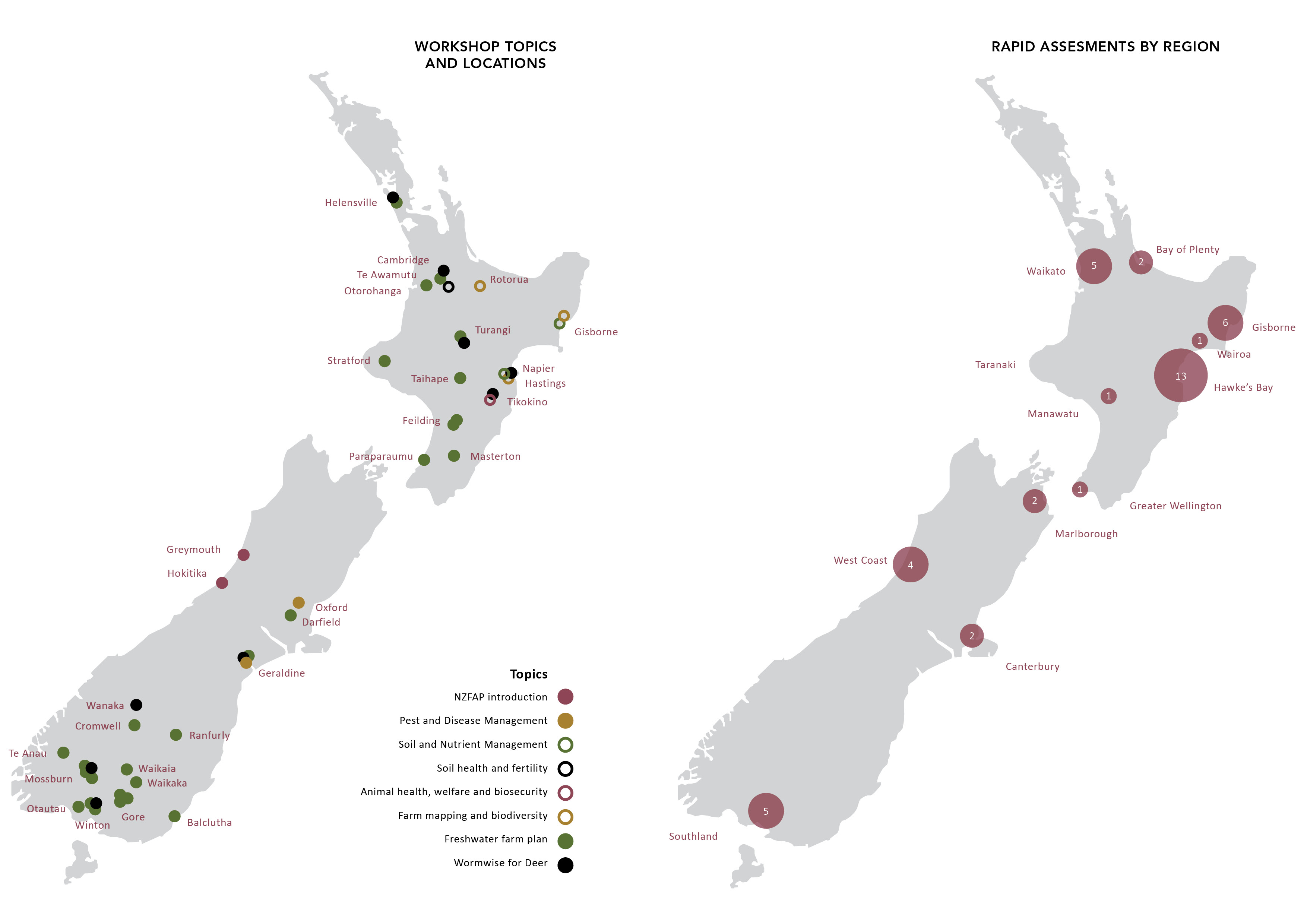
Over the course of the project, DINZ delivered 47 workshops across the country that covered a wide range of integrated farm planning topics, alongside 42 rapid farm assessments for farms on their progress toward NZFAP and NZFAP Plus certification. A total of 466 farmers attended workshops, representing 404 farm businesses (or around 35 percent of the industry), with the programme contributing to a significant increase in farm plan uptake. Farms with farm plans rose from 34 percent in 2024 to 63 percent by 2026, reflecting growing engagement with farm planning as a cornerstone of sustainable and profitable farming systems.
In addition to farm planning workshops and farm assurance programme rapid assessments, DINZ developed a suite of resources to help farmers – including the Farm Planning Tools Comparison Guide and, together with Beef + Lamb New Zealand, the Wormwise Parasite Management Calendar. It also saw a first batch of Deer Facts fact sheets updated, which will be distributed as inserts in Deer Industry News over time.
The programme also saw a small number of precision agriculture sessions delivered, which explored nutrient optimisation, carbon sequestration opportunities, and land-use decisions aligned with ETS participation. These sessions were well-received and provided some valuable insights for developing further such support opportunities beyond the IFP programme.
The workshops were considered of value by attendees, with two-thirds of attendees saying the freshwater farm planning workshops, which made up a large proportion of the total workshops, were useful or very useful, while the same was true for 91 percent of attendees of the Wormwise workshops. Both groups of attendees said they would recommend the workshops to other deer farmers.
“I really had no idea how to do it [freshwater farm planning],” said Will Rutherford, who attended the Cromwell workshop. “I knew a little bit about why it was needed but didn’t know the steps to take to complete it. I would’ve been lost without these workshop sessions.”
“The workshops got me thinking more about not only run-off but also leaching and groundwater a lot more. These are things I have considered as I plan things out differently.”
A big part of the programme was the desire to put farmers at the heart of farm planning, allowing them to take ownership of plans that might previously have required the services of external professionals.
“We had plans in place on farm already due to having irrigation on our farm, requiring farm plans when reapplying for consents,” said Samantha Elder, who attended the Waikaia freshwater workshop. “These plans, however, were done by a consultant, and it didn't feel like something that we understood, or were heavily involved in the process. It wasn't a dynamic document; we didn't refer to or update it ourselves and saw it as more of a 'have to do' or 'tick the box' exercise.”
“I have more understanding now as to what I can expect may be asked of us in the farm plan regulatory space, and I am confident that I can present a plan that is suitable to meet these requirements. I now know what information is important to record and update on the plan, and I can always present an up-to-date, specific and dynamic farm plan when required with just a click of a button through the QCONZ resource.”
It was not just environmental compliance that saw a focus under the programme, with DINZ’s 2024 survey telling us that animal health was a module desired by farmers.
“I have been farming for 30 years and have never been given so much relevant information on parasites, as well as on the use of drench and how to use it effectively,” said Phillip Bunn, who attended the Wormwise workshop in Luggate, as well as the freshwater planning workshop in Cromwell.
“Drenches are a massive cost and learning how to use them effectively is incredibly important.”
As the IFP programme wraps up, a number of clear lessons will carry forward into how DINZ supports farm planning in the future. Trusted facilitators with practical on‑farm experience have proven critical to driving engagement, alongside the importance of one‑on‑one support at key points to help farmers turn plans into action. While group workshops remain effective, flexibility in delivery — including modular sessions and online support — will be essential to work around time pressures.
The programme has also shown that digital tools can add real value when accompanied by the right technical support, and that uptake is strongest when the practical benefits of farm planning are clearly demonstrated. These insights will guide the next phase of farm planning support, ensuring it remains practical, accessible and farmer‑focused.